
Helping teenagers cope with divorce starts with two things: keeping adult conflict away from them and being honest about what is changing. Teens do not need a perfect separation. They need to know the people they rely on are still steady.
If your teen is between 11 and 17, they may understand more about divorce than a younger child, but that does not mean they know how to process it. Teens may ask difficult questions, become angry, withdraw, or act as if nothing has changed.
Key Takeaways
- Keep conflict away from your teen.
- Tell them what is happening honestly.
- Protect their routines.
- Never use them as a messenger.
- Watch for changes that last or interfere with daily life.
How Divorce Affects Teenagers
How divorce affects teenagers varies from one teen to another. Some may feel sad or angry. Others may seem relieved, quiet, or completely fine.
The American Academy of Child and Adolescent Psychiatry notes that children may feel sadness, anger, guilt, and worry about the future. Older children and teens may also experience school difficulties, behavior changes, or problems with relationships.
Teens are also developing independence and identity. Divorce can disrupt routines, living arrangements, family traditions, and their sense of what comes next.
Your teen does not need you to explain away every difficult feeling. They need space to react and parents who remain steady.
Talking works best when your teen feels heard rather than corrected, which is why a safe space for conversations at home matters so much right now.

How to Tell Your Teenager About Divorce
Knowing how to tell a teenager about divorce can make the conversation feel less overwhelming. When possible, both parents should prepare the message together.
- Agree on the basic message. Keep the explanation short, factual, and appropriate for your teen’s age.
- Tell them together, if possible. This can help your teen understand that both parents are still focused on their well-being.
- Choose a calm time. Avoid school mornings, major exams, or moments when you have to leave immediately afterward.
- Be honest without oversharing. Explain what is changing without sharing adult relationship details or assigning blame.
- Say clearly that it is not their fault. Teens may wonder whether something they did caused the separation.
- Explain what will stay the same. Talk about school, activities, friends, routines, and other parts of daily life.
- Let them react. Anger, silence, sadness, questions, or no visible reaction can all happen.
- Keep talking. One conversation is rarely enough. Your teen may need time before they know what they want to ask.
The AACAP recommends telling children together when possible, keeping explanations straightforward, reassuring them that the divorce is not their fault, and avoiding discussions about each parent’s faults.
For a neurodivergent teen, changes in routine may feel especially difficult. Give them extra processing time and provide plans in writing if that makes information easier to manage.
What Your Teen Says vs. What It May Mean
A teen’s words do not always explain what they are feeling. Look for patterns rather than trying to interpret one comment on its own.
| What your teen says | What it may mean | What can help |
| “I don’t care.” | Hurt or overwhelm they cannot explain yet. | Stay calm and let them know you are available. |
| “Whatever, do what you want.” | They may feel powerless over the changes. | Offer choices about things they can control. |
| “Which one of you is moving out?” | They want concrete information and predictability. | Give clear answers about upcoming changes. |
| “I’m fine.” | They may not be ready to talk or may be protecting you. | Check in again later without pushing. |
| “I hate you both.” | Anger about a situation they cannot control. | Acknowledge the anger without taking it personally. |
| “Can I stay at my friend’s?” | Home may feel tense, and they may want space. | Reduce conflict at home while maintaining connection. |
One comment does not tell you everything. Patterns over time matter more.
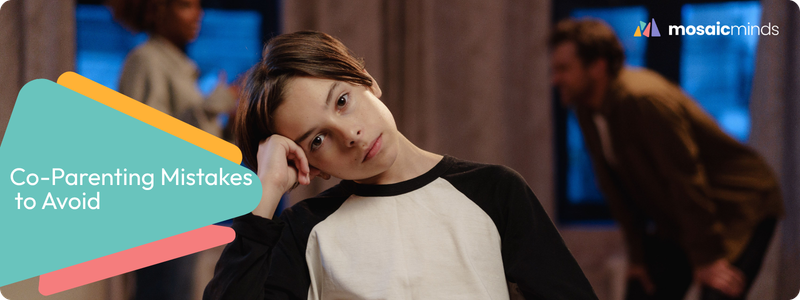
Co-Parenting a Teenager: 5 Mistakes to Avoid
Co-parenting a teenager means keeping the basics consistent while allowing your teen to maintain a relationship with both parents. The American Academy of Pediatrics recommends avoiding situations that put children in the middle of parental conflict.
- Using your teen as a messenger. Communicate directly with the other parent instead of saying, “Tell your dad…”
- Speaking badly about the other parent. Your teen should not feel responsible for choosing sides.
- Treating your teen like an emotional support person. Share adult concerns with another adult, not your child.
- Changing every rule between homes. Try to keep important expectations around school, curfews, and responsibilities reasonably consistent.
- Ignoring your teen’s schedule. Jobs, sports, friendships, and activities are important parts of adolescence.
Neither parent has to handle every moment perfectly. Saying, “I handled that badly,” can show your teen that adults can acknowledge mistakes and repair relationships.
When to Get Help for a Teen Struggling With Divorce
Sadness, frustration, and irritability can be part of adjusting to a major family change. Consider professional support when changes persist, become more intense, or begin interfering with daily life.
You may want to reach out if your teen:
- Withdraws from friends, family, or activities they previously enjoyed
- Has ongoing changes in sleep, appetite, or energy
- Stops attending school or experiences a significant drop in grades
- Has frequent anger, panic, or tearfulness
- Talks about feeling hopeless or worthless
- Shows risky behavior or self-harm
Knowing the common red flags in teenage behavior can help you tell the difference between a hard adjustment and something that needs more attention.
Family therapy can provide a space for family members to improve communication and work through changes together. Mosaic Minds also provides support for teens experiencing depression. When sadness lingers, it helps to know how to help your teenager with depression before it starts affecting school, sleep, and friendships.
Teen Therapy in Chandler, AZ for Families in Transition
Helping teenagers cope with divorce does not always mean therapy is necessary. Our guide to family therapy for teens explains when it can help. But if the transition is contributing to broader emotional, behavioral, school, or daily-life challenges, professional support may be worth exploring.
Mosaic Minds offers teen therapy in Chandler, AZ for adolescents ages 11 to 17. Its IOP and PHP programs provide more structure than weekly therapy when a teen needs additional support. Families remain involved throughout the process.
The right level of support depends on your teen’s current needs and daily functioning.
Teens and Divorce FAQs
There is no single age when divorce is automatically most damaging. Children and teens can respond differently depending on their developmental stage, family circumstances, level of conflict, and available support. What matters is helping the teen feel safe, supported, and connected to both parents when appropriate.
Keep conversations low-pressure. Some teens open up more while driving, walking, cooking, or doing another activity rather than sitting down for a serious conversation. Keep routines consistent, avoid putting him between parents, and let him know he can talk without being judged.
There is no set timeline. A teen may adjust to new routines over time, but difficult feelings can return around holidays, school changes, birthdays, or other family transitions. If your teen’s struggles are getting worse or interfering with daily life, consider professional support.
They can expect some changes, but parents can make those changes easier to understand. Explain where they will live, how routines may work, and what will stay the same. Let your teen know that mixed feelings such as sadness, anger, relief, or confusion can happen.
Helping teenagers cope with divorce takes time. Your teen does not need perfect parents or a perfect transition. They need honesty, stability, room to have feelings, and support when those feelings become difficult to manage.