Free Clinical Pre-Screen

Where Can Parents Find Help for Troubled Teens?

For parents who feel out of options: who to call first, what treatment looks like, and how to spot a program to avoid.
November 19, 2026
 
6 min read
Written by
Katie Crosby
LMSW, Primary Therapist @ Mosaic Minds

Katie is a Licensed Master Social Worker experienced in providing therapy to adolescents and families.

help for troubled teens

Help for troubled teens usually starts closer to home than parents expect. Begin with your teen’s doctor or school counselor, then get a mental health evaluation if the problems keep going. From there, most teens do best with outpatient therapy or a day program near home, not a boot camp hundreds of miles away.

Key takeaways

  • “Troubled” behavior is often a sign of something underneath, like anxiety, depression or stress at school.
  • Start with your teen’s doctor or a licensed mental health professional, not a program ad.
  • Most teens can get the help they need while living at home.
  • Be wary of any program that limits family contact or can’t show a license.

Lots of parents are in the same spot right now. In CDC’s 2025 Youth Risk Behavior Survey, roughly one in three high schoolers said they felt sad or hopeless for weeks at a time, yet fewer than a third of those teens had seen a counselor or therapist in the past year.

When Does Teen Behavior Need Professional Help?

Teen behavior needs professional help when it lasts for weeks, keeps getting worse, or starts to wreck school, friendships or home life. Eye rolls and slammed doors are part of being a teenager. Skipping school, constant fighting, pulling away from everyone, or talking about feeling hopeless are signs to get an evaluation.

1 in 3
High school students who felt persistently sad or hopeless
Under 1 in 3
Of those students had seen a counselor or therapist in the past year

The word troubled gets used a lot, but most of these teens are struggling, they are not bad. Anxiety can look like defiance. Depression can look like laziness. Our guide on how mental health affects teens explains how that shows up at school and at home, and we also break down normal moodiness versus real red flags.

Where Should Parents Start?

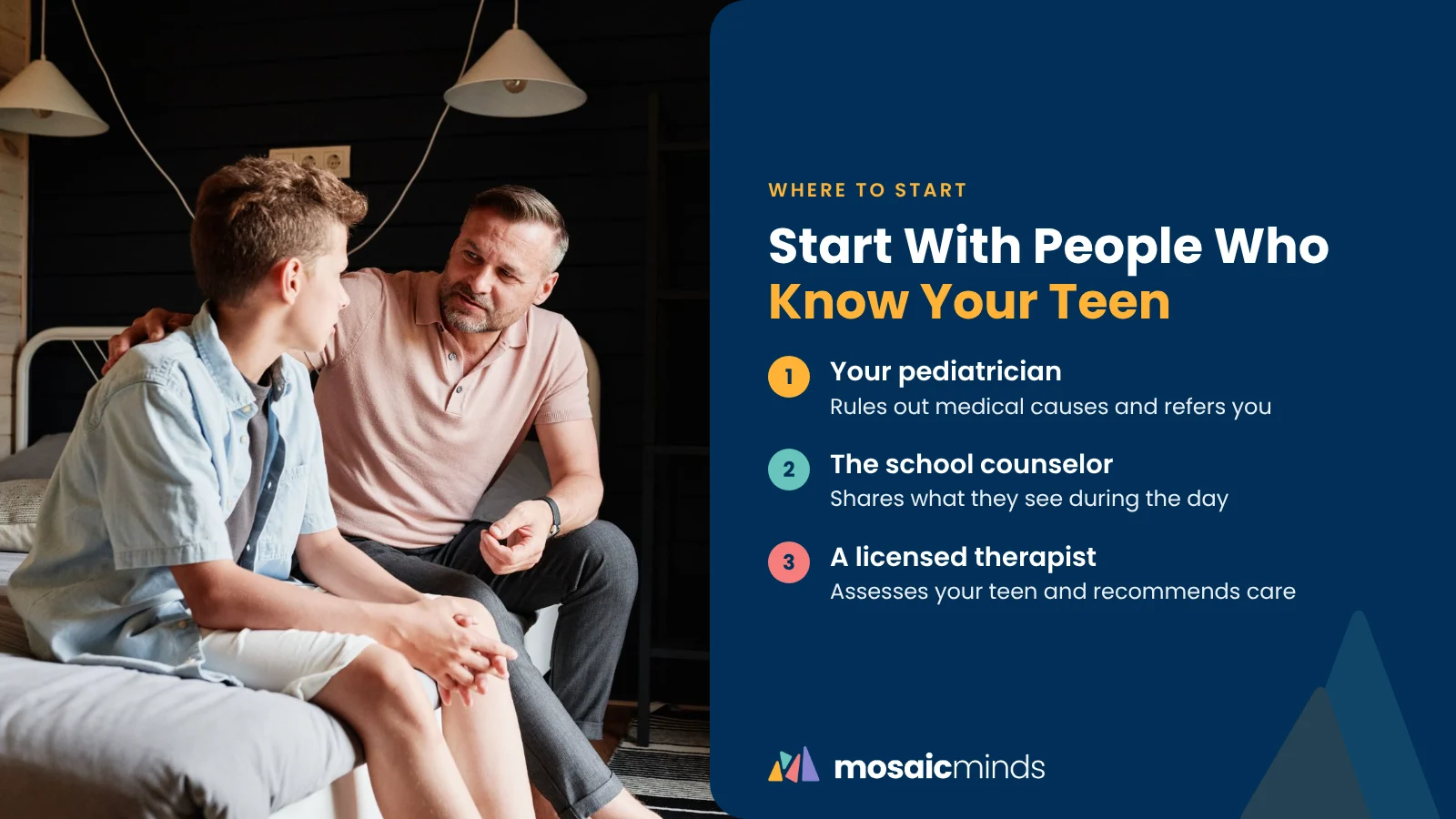
Start with the people who already know your teen. Your pediatrician can rule out medical causes and refer you for an evaluation. Your teen’s school counselor can tell you what they see during the day. A licensed therapist or adolescent program can then assess your teen and recommend a level of care.

In practice, it often goes like this:

  1. Talk with your teen calmly about what you have noticed, without a lecture.
  2. Book a visit with their pediatrician and bring specific examples.
  3. Check in with the school counselor about grades, attendance and friendships.
  4. Schedule a mental health evaluation with a licensed professional.
  5. Choose the least intensive level of care that keeps your teen safe and making progress.
who to call for troubled teens

What Kinds of Help Are There for Troubled Teens?

Help for troubled teens ranges from weekly therapy to full-time residential care. Most teens start with outpatient therapy. When that isn’t enough, an intensive outpatient program (IOP) or partial hospitalization program (PHP) adds more hours of treatment while your teen keeps living at home and stays connected to school.

Level of careWhat it involvesOften a fit when
Weekly therapyOne session a week with a therapistProblems are real, but your teen is mostly managing day to day
Intensive outpatient (IOP)Several hours of therapy and skills work each week, home every nightWeekly sessions aren't enough on their own
Partial hospitalization (PHP)A structured treatment day, home at nightYour teen needs daily support but is safe at home
Residential treatmentLiving at a supervised facility for a period of timeOutpatient care hasn't helped, or home is not safe right now

AACAP describes residential care as an option for teens who haven’t improved with outpatient treatment or whose health is at risk in their community. For most families, it is not the first step.

Are Boot Camps and Wilderness Programs Safe?

Some may be, but it is hard to tell from a website. A federal GAO investigation found thousands of abuse allegations at residential programs for teens between 1990 and 2007, and reported that no federal law defines or regulates them. State oversight ranged from licensing to nothing at all.

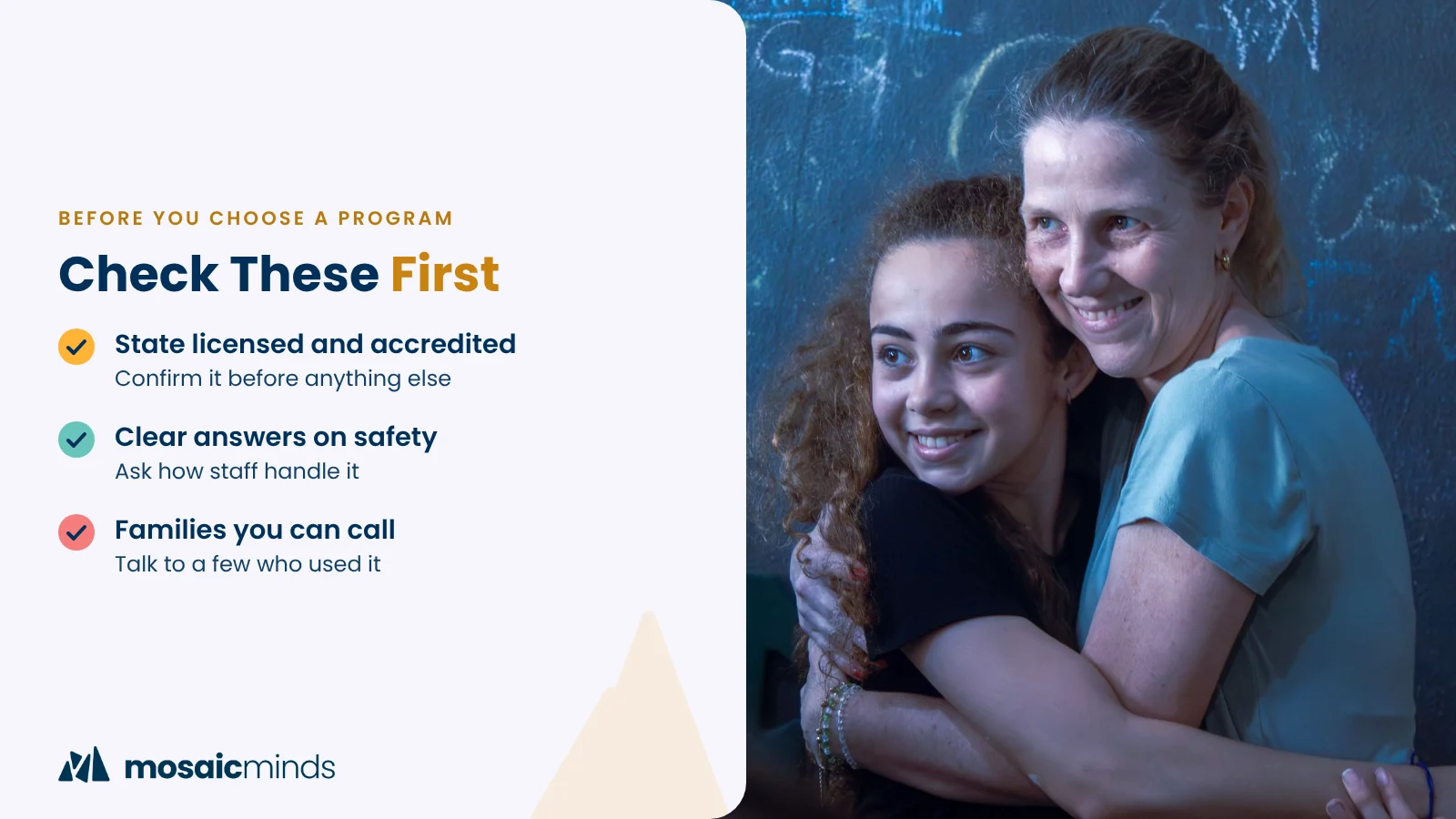
A residential program might come up as an option, especially if things are really bad. AACAP recommends checking that it’s state licensed and accredited, asking how staff handle safety, and calling a few families who’ve used it. A program that restricts phone calls home, or gets vague about its therapy, is a red flag.

Not sure which level of care your teen needs? Our intensive outpatient program and partial hospitalization program are built for teens who need more than weekly therapy while living at home.

troubled teen program red flags

How Can You Support Your Teen at Home Meanwhile?

While you’re waiting on an appointment, home just needs to be steady enough. For most families that means bedtimes and dinner stay put, a couple of rules stay firm, and everything else gets dropped for now. Don’t push for big talks. Some of the best talks with teens happen in the car.

If every conversation turns into a fight, our tips on parent and teenager communication can help you lower the temperature. And when you do find a therapist, here is what to expect in teen therapy from the first call on.

Help for Troubled Teens in Chandler, AZ

At Mosaic Minds, our teen therapy in Chandler, AZ is built for teens 11 to 17 who need more than weekly sessions. Our IOP and PHP let your teen live at home and stay connected to school, with family involvement throughout. Every family starts with a free consultation and an assessment.

If you are looking for teen therapy in Chandler, AZ, talk with our admissions team or call 480-916-9600. We’ll help you figure out the next step, even if that means pointing you somewhere else.

Talk to our team
→

Help for Troubled Teens FAQs

Calm things down first. Lower your voice, walk away from the argument if you need to, and stick to one or two limits you can actually enforce. Later, when everyone has cooled off, set up an evaluation. Behavior that feels out of control usually has something under it, like anxiety, depression or trouble at school.

That depends on what’s going on underneath. Cognitive behavioral therapy has strong research for teen anxiety and depression. If most of the trouble shows up as fighting at home, family therapy may do more. An evaluation sorts this out so you’re not guessing, and the plan can change as your teen does.

You can usually get your teen to an appointment, but you can’t make them talk. Explain why you are worried, give them some say in the details, like the time or the therapist, and expect a rocky start. Many teens warm up once they figure out the therapist is on their side.

Some irritability comes with being a teenager. Anger that lasts for weeks, gets physical, or shows up with other changes, like poor sleep or falling grades, is different. In teens, depression and anxiety often look like anger rather than sadness, so constant anger is worth having checked by a professional.

In this article
Not sure what your teen needs?
Katie Crosby

Katie Crosby is a Licensed Master Social Worker (LMSW) and Primary Therapist at Mosaic Minds, with experience providing therapy to adolescents and families. She takes a holistic, strengths-based approach that focuses on each person’s unique abilities and resilience. Her goal is to create a safe, supportive environment where people feel heard, empowered and confident as they navigate challenges and grow.

Related posts

Not sure what your teen needs?

Lena Moses

Executive Director

Lena holds a Bachelor’s degree in Psychology and a Master’s degree in education, with a background in child development, community relations, training, mediation and coaching. She is passionate about nuerodiversity inclusion and the transformative power of understanding psychology and brain development. Based in Arizona, she enjoys life with her two daughters and four rescue dogs and finds joy in storytelling through theater, music and poetry.


Brayden Younghusband

Brayden is in recovery himself and has made it his career and passion to be an advocate to people struggling from substance use and mental health disorders.  He has nearly a decade of experience in the behavioral health field in operations, executive leadership, and marketing.  Brayden leans into his own personal experience to help people find long term recovery. Originally from Vancouver, Canada he now resides in Mesa, AZ with his partner and two bulldogs Beau and Lilly. Brayden has a passion for helping others, ice hockey, formula 1, and travel.

Katie Crosby

Katie Crosby

Primary Therapist

Licensed Master Social Worker (LMSW) experienced in providing therapy to adolescents and families. I take a holistic, strengths-based approach, focusing on each individual’s unique abilities and resilience. My goal is to create a safe, supportive environment where individuals feel heard, empowered, and confident as they navigate challenges and grow.

Taylor Johnson

Program Manager

Serving as our Program Manager, dedicated to supporting adolescents through growth, self-discovery, and therapeutic development. With a deep passion for working with young people, Taylor focuses on helping adolescents identify who they are, understand their strengths and develop a strong sense of self during some of the most formative years of their lives.