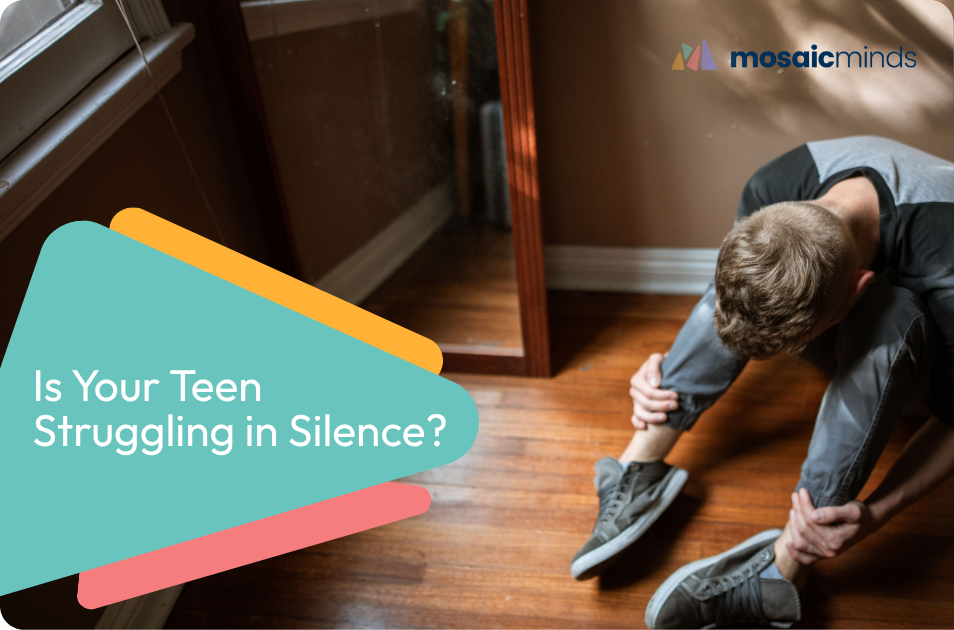
If you’re asking, “How can I help my teenager with depression?” you have probably noticed a change. Maybe your teen has stopped talking, lost interest in favorite activities, or started getting upset over small things.
You want to help, but you may not know what to say or what to do next.
Start with a few simple steps:
- Listen without trying to fix everything. Let your teen know you are there, even when they don’t want to talk.
- Keep routines predictable. Regular meals, sleep, and manageable daily expectations can provide stability.
- Look for ongoing changes. If signs of depression last two weeks or longer, contact your teen’s doctor or a qualified mental health professional. Seek help sooner if symptoms are severe or you are worried about their safety.
- Remember that support can help. Depression is treatable, and your teen does not have to figure everything out alone.
You are not alone in this. According to the National Institute of Mental Health, 20.1% of U.S. adolescents ages 12–17 experienced a major depressive episode in 2021. Of those adolescents, 40.6% received treatment.
Reaching out for help is not overreacting. It is a way to show your teen that their well-being matters.
Signs of Depression in Teenagers
Depression does not always look like sadness. Some teens become quiet and withdrawn. Others seem angry, frustrated, or unusually distant.
Watch for changes that persist or begin affecting everyday life, such as:
- Pulling away from friends, family, or favorite activities.
- Sleeping much more or less than usual.
- Losing interest in hobbies they once enjoyed.
- Falling grades, missed assignments, or frequent school absences.
- Low energy or difficulty starting everyday tasks.
- Increased irritability or emotional outbursts.
- Talking about feeling worthless, hopeless, or like a burden.
One sign alone does not necessarily mean your teen is depressed. What matters is the pattern, how long it lasts, and how much it affects their life.
The American Academy of Child and Adolescent Psychiatry offers more information about depression in children and teens.
Some of these changes overlap with other red flags in teenage behavior, so pay attention to how long they last and how much they disrupt school, sleep, and relationships.
How to Talk to a Depressed Teenager
Knowing how to talk to a depressed teenager can be difficult.
You don’t need a perfect speech. Start with a calm conversation when neither of you feels rushed. A walk or car ride may feel more comfortable than sitting face-to-face.
| Instead of saying | Try saying |
| “Just cheer up.” | “I’m here for you, even when things feel hard.” |
| “What do you have to be depressed about?” | “I’ve noticed you’ve seemed down lately. Want to tell me about it?” |
| “You’re just being lazy.” | “It seems like everyday things have been taking a lot of effort.” |
| “When I was your age…” | “Tell me more about what this feels like for you.” |
| Asking question after question | “You don’t have to talk right now. We can try again later.” |
| Immediately offering solutions | “Would you like me to listen, or would you like help figuring something out?” |
If your teen opens up, try to stay calm, even if what they share is difficult to hear. Thank them for trusting you.
If you are worried about their safety, ask calmly and directly whether they have thought about hurting themselves or ending their life. Asking about suicide does not put the idea in their head, and it gives your teen an opening to tell you what is really happening.
If they are not ready to talk, don’t force the conversation. Let them know you will check in again.
Discipline, Phones and School: Parenting a Depressed Teen
When a teen is struggling, everyday parenting decisions can become harder. Rules still matter, but your approach may need to change.
Discipline
Depression can affect energy, concentration, motivation, and daily responsibilities. What looks like defiance may sometimes be a sign that your teen is struggling.
Try to:
- Keep a few clear, reasonable household rules.
- Break chores and responsibilities into smaller steps.
- Use calm, predictable consequences when needed.
- Recognize effort, even when progress is slow.
- Avoid long lectures, humiliation, or harsh punishment.
You can show understanding without removing every expectation. The goal is to help your teen manage responsibilities while feeling supported.
Phones and screen time
Taking a phone away in anger may increase conflict, especially if your teen relies on it to stay connected with friends.
Instead, agree on boundaries together. For example, you might charge phones outside the bedroom at night to protect sleep.
Ask about their online experiences without immediately criticizing them.
School
Depression can make school feel overwhelming. Missed assignments and absences may quickly build into more stress.
Contact the school counselor early. Together you can plan for missed work, adjust deadlines, and decide whether formal supports, such as a 504 plan, would help while your teen recovers.
Focus on manageable steps rather than expecting everything to return to normal overnight.
Family relationships can also affect how a teen feels. Family support can help parents learn how to respond to their teen’s needs. If divorce or separation is part of your family’s experience, helping teenagers cope with divorce starts with making space for their feelings without asking them to take sides.

Depression in Teens With ADHD or Autism
Depression can be harder to recognize in teens with ADHD or autism because some signs may overlap with other challenges.
For example, a teen may come home exhausted after managing noise, social expectations, transitions, and schoolwork all day. They may shut down, become more irritable, or need extra time alone.
These changes do not automatically mean depression. However, a noticeable change from your teen’s usual behavior deserves attention.
You can help by:
- Asking what feels difficult instead of assuming your teen is being uncooperative.
- Providing quiet time after demanding school days.
- Reducing unnecessary sensory and social pressure.
- Noticing changes in sleep, interests, mood, or daily functioning.
- Finding support that respects how your teen communicates and experiences the world.
At Mosaic Minds, our neurodivergent-affirming support takes into account differences in communication, sensory needs, and everyday experiences.
The goal is not to change who your teen is. It is to understand what they need and help them feel supported.
What to Do If Your Teen Refuses Help
When a depressed teenager refuses help, you may feel frustrated, scared, or unsure what to do next.
Your teen may worry about being judged, feel embarrassed, or believe that nothing will make a difference. Instead of turning the conversation into a battle, try these steps.
- Stay calm and keep the door open.
- Describe what you’ve noticed.
- Offer choices.
- Start with a smaller step. A conversation with their pediatrician or school counselor may feel less intimidating than starting therapy.
- Explain your reasons. Make it clear that getting support is not a punishment or a sign that something is wrong with who they are.
- Try again later. A refusal today does not mean your teen will always refuse. Give them some space and revisit the conversation.
- Get support for yourself.
You can seek professional guidance even if your teen is not ready to participate. You do not need to wait until things become worse to ask what options are available.
What if my teen is in crisis?
If your teen talks about suicide, threatens to hurt themselves, or you believe they may be in immediate danger, take the situation seriously.
Stay with your teen if it is safe to do so, and reduce access to items they could use to hurt themselves. If you are unsure how serious the situation is, seek professional guidance rather than waiting for symptoms to pass.
Teen Depression Support and Teen Therapy in Chandler, AZ
You do not have to navigate this situation alone. Sometimes, listening and making changes at home are not enough.
Mosaic Minds supports teens ages 11–17 in Chandler, Arizona. Our approach is individualized and neurodivergent-affirming, with family involvement throughout the process.
Some teens need more support than weekly sessions can provide. Mosaic Minds offers two structured program options:
- Intensive Outpatient Program (IOP): Provides additional support and structure while helping teens stay connected to home, school, and daily life.
- Partial Hospitalization Program (PHP): Offers a more structured level of support for teens who need more help managing daily life.
The right option depends on your teen’s individual needs. Mosaic Minds offers an initial consultation and assessment process to help families understand their options.
Teen Depression FAQs
There is rarely one single cause. Family history, ongoing stress, bullying, loneliness, difficult life changes, and school pressures may all play a role. Biological factors can also contribute. Every teen’s experience is different.
Teens may benefit from talking to a trusted adult, spending time with supportive friends, maintaining regular sleep and meal routines, and taking small steps toward activities they enjoy. Professional support can help when depression affects everyday life.
It depends on the situation. Taking a phone away as an angry punishment can increase conflict and cut off an important source of social connection. Instead, agree on reasonable boundaries together, such as charging the phone outside the bedroom at night, so sleep is protected without cutting your teen off from supportive friends.
Keep expectations clear, calm, and manageable. Break tasks into smaller steps and acknowledge effort rather than focusing only on what your teen has not done. Depression can make everyday responsibilities feel harder, but that does not mean every behavior should be ignored.